
NWi
Cross-Border Insights Global Overview|3C Digital Category
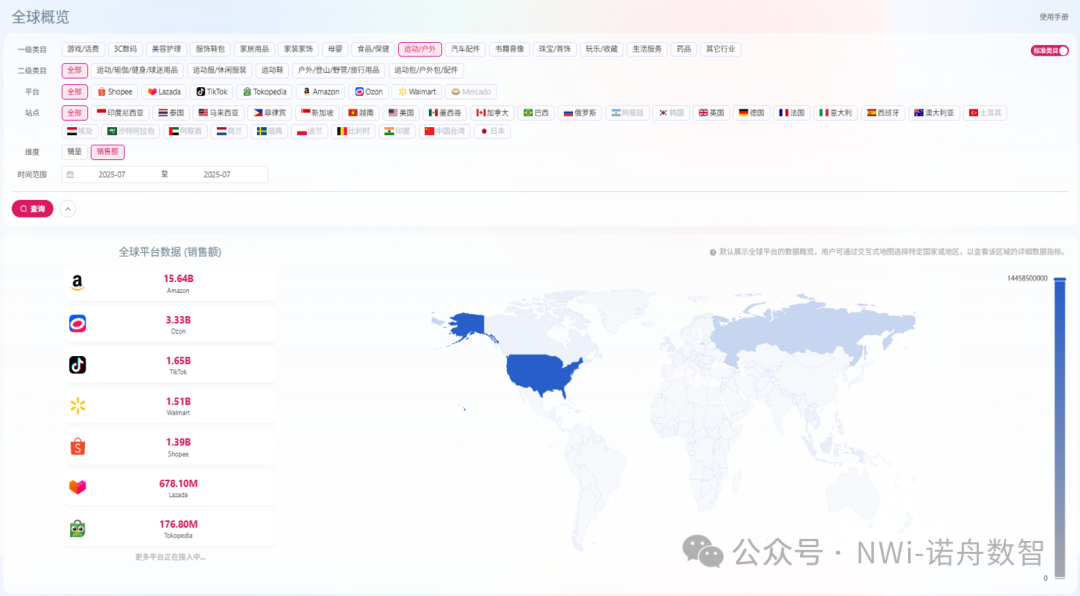
Source: NWi CrossborderGo Global Overview-3C Digital Category Sales Revenue in July 2025
2025 Aug.
The sinking of technology and “de-elitization”
A classic outlet for cross-border merchants
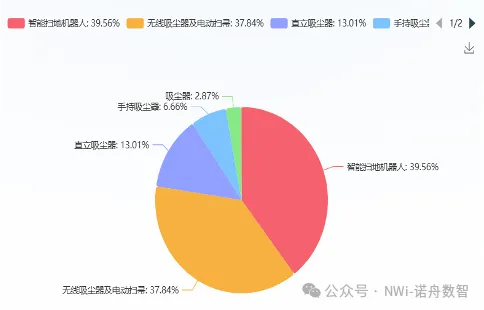
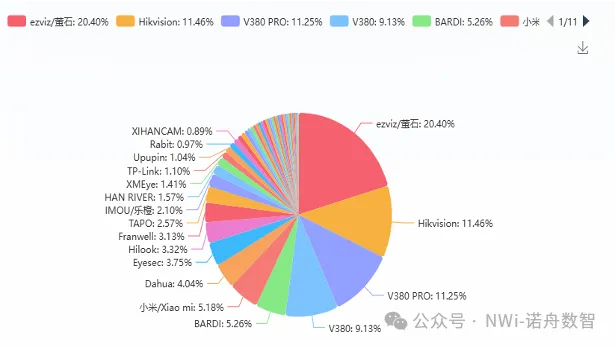
July data showed two categories growing faster than the rest. In the United States, robot vacuums are replacing upright vacuum cleaners as smart homes spread; in Indonesia, on Shopee, surveillance cameras and security systems doubled year on year and took more than 30% of the category. Hikvision’s sub-brand EZVIZ led with a 20.4% share, and sales come mainly from household buyers. Smart cleaning and home security point to the same trend: consumers will pay for technology that is smarter and needs less effort. As technology becomes affordable, it reshuffles the category — and that is where cross-border sellers find openings.
01
Robot vacuums drive US cleaning-appliance growth
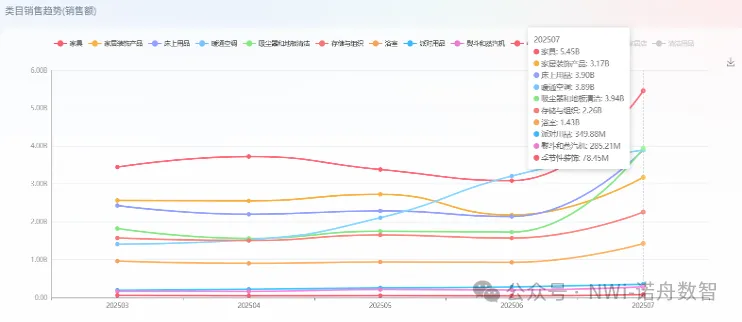
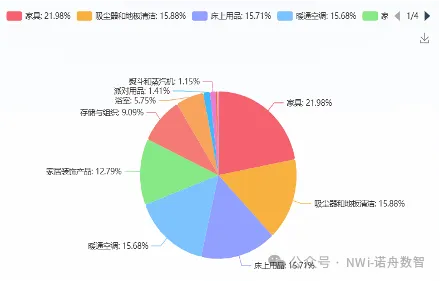
In July, vacuum cleaners and floor-care products in the US Amazon Household Products category grew 126% month on month , and the driver is not seasonal demand but the robot vacuum going mainstream.
From "rigid needs" to "intelligent rigid needs"
Although traditional upright vacuum cleaners are still a must-have for many households, the cleaning habits of consumers in the United States are changing:
US households spend fewer hours a week on housework, and younger buyers are especially unwilling to spend them on repetitive vacuuming.
Smart speakers and smart lights have made the connected home ordinary, and a robot vacuum fits into that routine. A machine that cleans itself is no longer a niche toy; it is the default replacement.
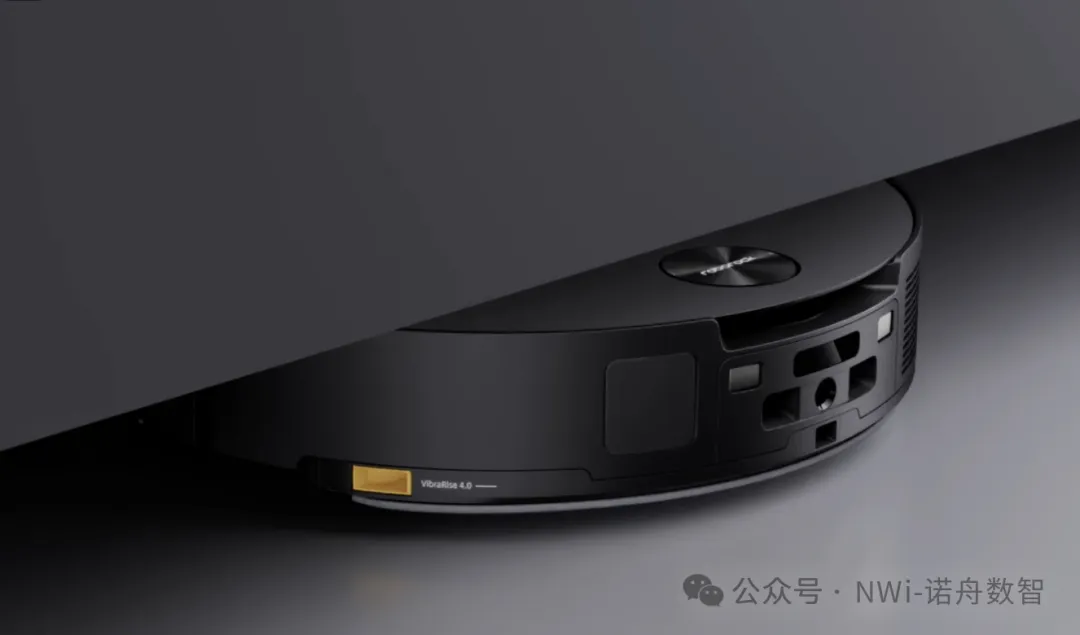
What better hardware changed
US buyers used to complain about weak suction, robots that got stuck, and short battery life. Two years of hardware improvements answered most of that:
• Laser and visual navigation plan a cleaning path far more efficiently;
• Self-emptying bins and mopping solve incomplete cleaning and high maintenance;
• Prices fell:
mainstream models moved from
about USD 1,000
to
several hundred dollars
, which accelerated adoption.
Robot vacuums are no longer just replacing upright cleaners; they are becoming a standard household appliance.
How buyer expectations changed
What US buyers want from a cleaning appliance is shifting too:
• From function to experience
: a vacuum is no longer enough; buyers want their hands free.
• From one-off purchase to long-term investment
: they will pay for better sensors, app connectivity, and consumable subscriptions.
• From comparing specs to buying a feeling
: ads show someone drinking coffee while the robot cleans, selling a better quality of life.
Who holds the US robot vacuum market
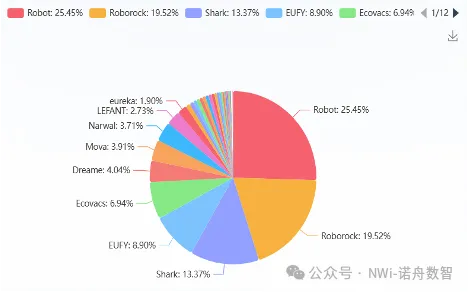
Source: NWi CrossborderGo
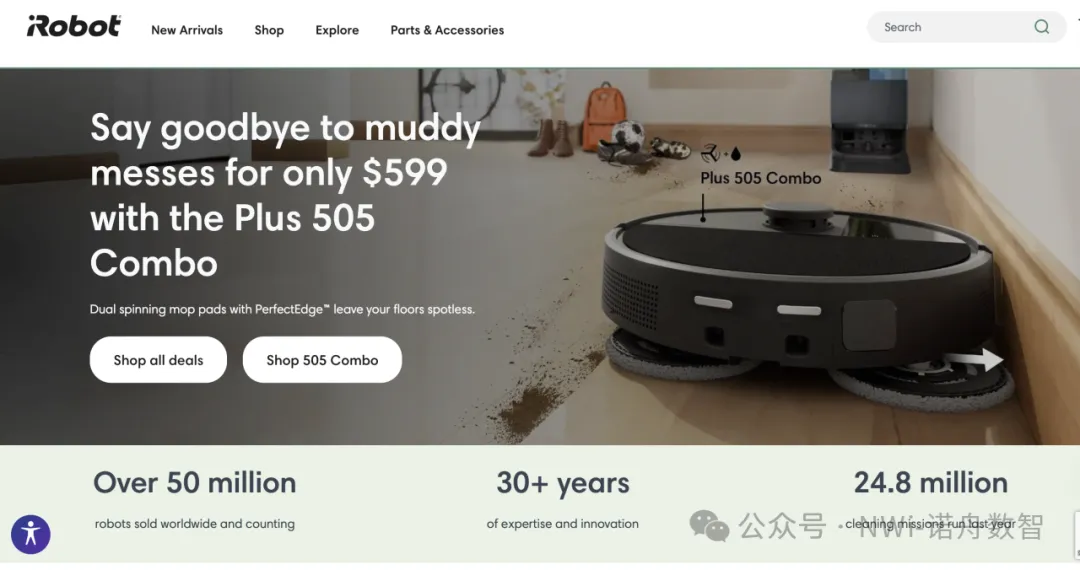
iRobot (25.45%) is the local leader and still the No. 1 brand. Almost every US consumer meets a robot vacuum through iRobot, and many call any robot vacuum a Roomba. The brand has long held the high end, and its awareness is the category benchmark.
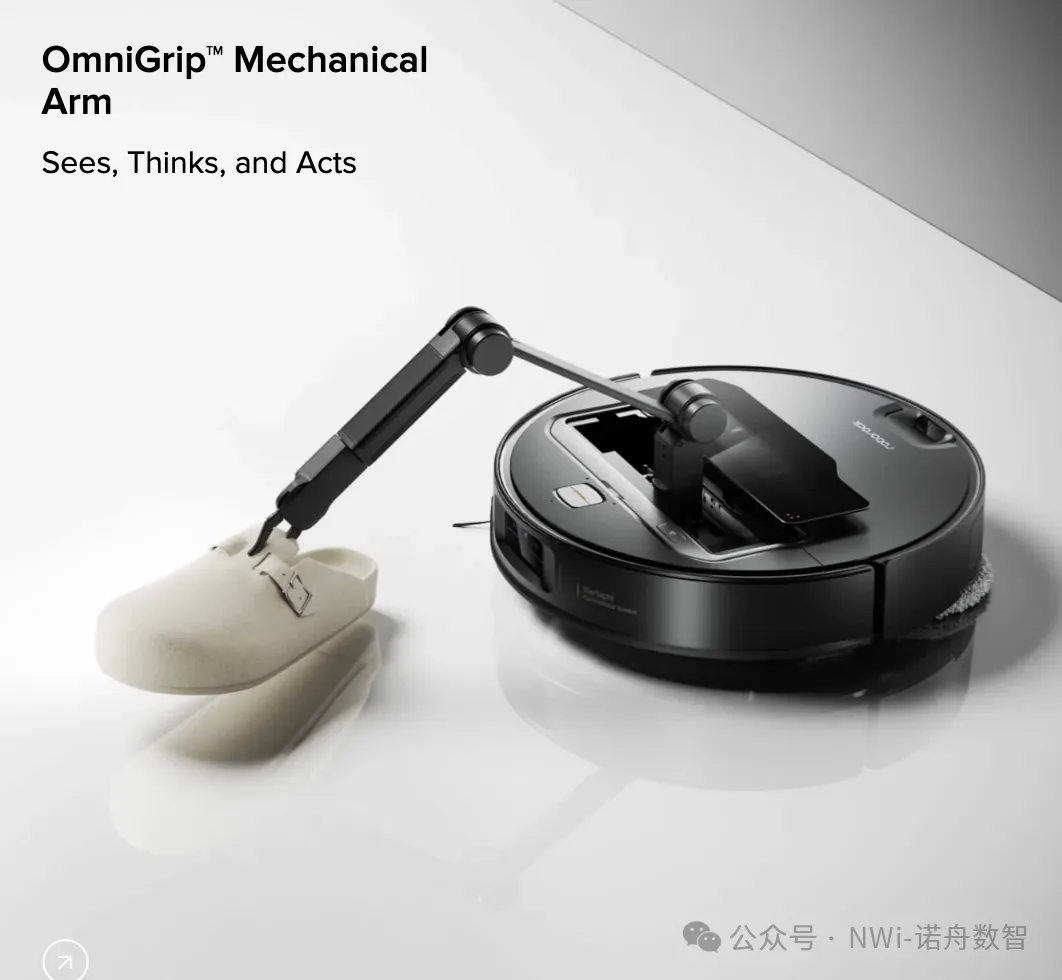
Roborock (19.52%): Chinese brand leader , almost rivaling iRobot, is a representative of China’s overseas brands, focusing on technical strength (laser navigation, integrated mopping and sweeping, automatic dust collection), and its competitiveness in the mid-to-high-end price range is outstanding. use "Technology + Cost-Effectiveness" Quickly build reputation and perform particularly well in e-commerce channels in the United States.
Shark (13.37%): Cost-effective representative , a local small household appliance brand in the United States, uses the traditional vacuum cleaner user base to enter the robot market. It is priced lower than Roomba, has strong suction and cleaning power, and is suitable for price-sensitive consumers. But it is not as good as Roborock in terms of intelligent experience.
Eufy (8.90%): Lightweight entry-level choice , cheap, easy to use and suitable for Renters famous. The functions are relatively basic and lack high-end features.
Ecovacs (6.94%)— All-round Chinese brand , covering different price ranges from mid-range to high-end. Emphasis on multi-function (sweeping, vacuuming, mopping, washing), and early layout in the "whole house cleaning plan". However, the brand power of the United States market has not yet been fully established. Not as well-known as Robot and Roborock.
Consolidation is coming
Every new technology moves from high-end niche to mass market, and that move always sorts winners from losers. Smartphones went the same way: the brands that held on combined technical strength, brand power, and user experience. The US robot vacuum market is at that point now, moving from early trial to everyday necessity. The brands that hold their ground will take the real returns in this smart-home cycle.
United States users from "Trust big brands" gradually turns to "performance comparison" , which gives Chinese brands the opportunity to break through quickly with the combination of "technology + cost performance". In the future, whoever can establish differentiation in intelligent + whole-house cleaning solutions may further expand its share.
02
Security cameras: Indonesia’s market doubles
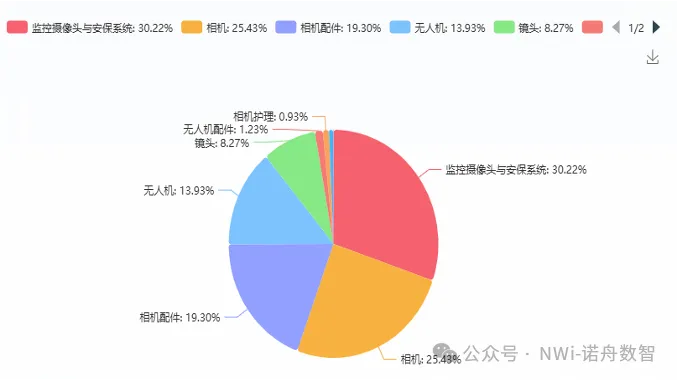
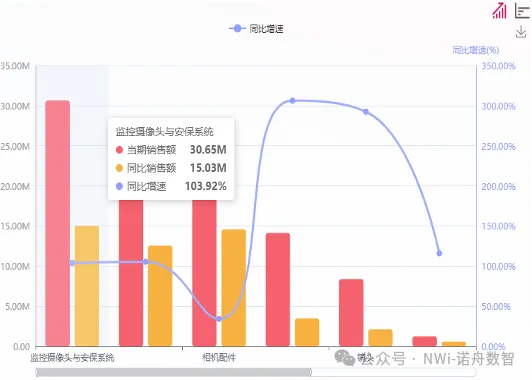
On Shopee Indonesia in July, surveillance cameras and security systems were the largest part of the Photography and Camera category, above 30% and up 103.92% year on year, making security the core of the category. Cameras took 25.43%, still a large base but growing more slowly than security.
Source: NWi CrossborderGo
Homes and small businesses in Indonesia are common scenarios for security systems and surveillance cameras. Indonesia The expansion of the middle class and the acceleration of urbanization , making “family security” a new pain point. There are a huge number of small and micro merchants (convenience stores, restaurants, workshops) and there is a strong demand for low-cost, visual security equipment.
Sub-brands overtake the main brand to top the sales volume list
Source: NWi CrossborderGo
EZVIZ, a sub-brand of the security giant Hikvision, took the top share in Indonesia because it sits closer to consumers . Where the main brand serves business and engineering projects, EZVIZ focuses on homes and small merchants. It is good value, ready to use, easy to install, and well localized in its app , and it invested in e-commerce channels and brand exposure . That let it capture demand for affordable smart security and build a lead in consumer security.
The Indonesian security equipment market is experiencing an explosive period. “Rigid demand + high growth + strong Chinese brands” are the three key words. In the next few years, as Indonesia's middle class and small business groups further expand, local consumers will pay more and more attention to "whether it is easy to use" and "whether the after-sales service is reliable."
For Chinese sellers, making surveillance cameras is their strength , if we can strengthen localized experience and services on the basis of high cost performance, we will have the opportunity to form long-term advantages in the Indonesian market and copy the growth path of the domestic security industry.
Cleaning and security look like different tracks, but the logic is the same: emerging technology moves from elite to mass market . Today’s robot vacuum is where the smartphone was a decade ago; today’s home security is where the smart lock was a few years ago. The brands that hold on will be those that understand both the technology and the user , and can adapt to the local market. For overseas sellers, that is more than extra volume: it is a way into the global upgrade in consumption.